What Is HEX and Why It Matters More Than You Think
1/9/2026
5 min read
Share
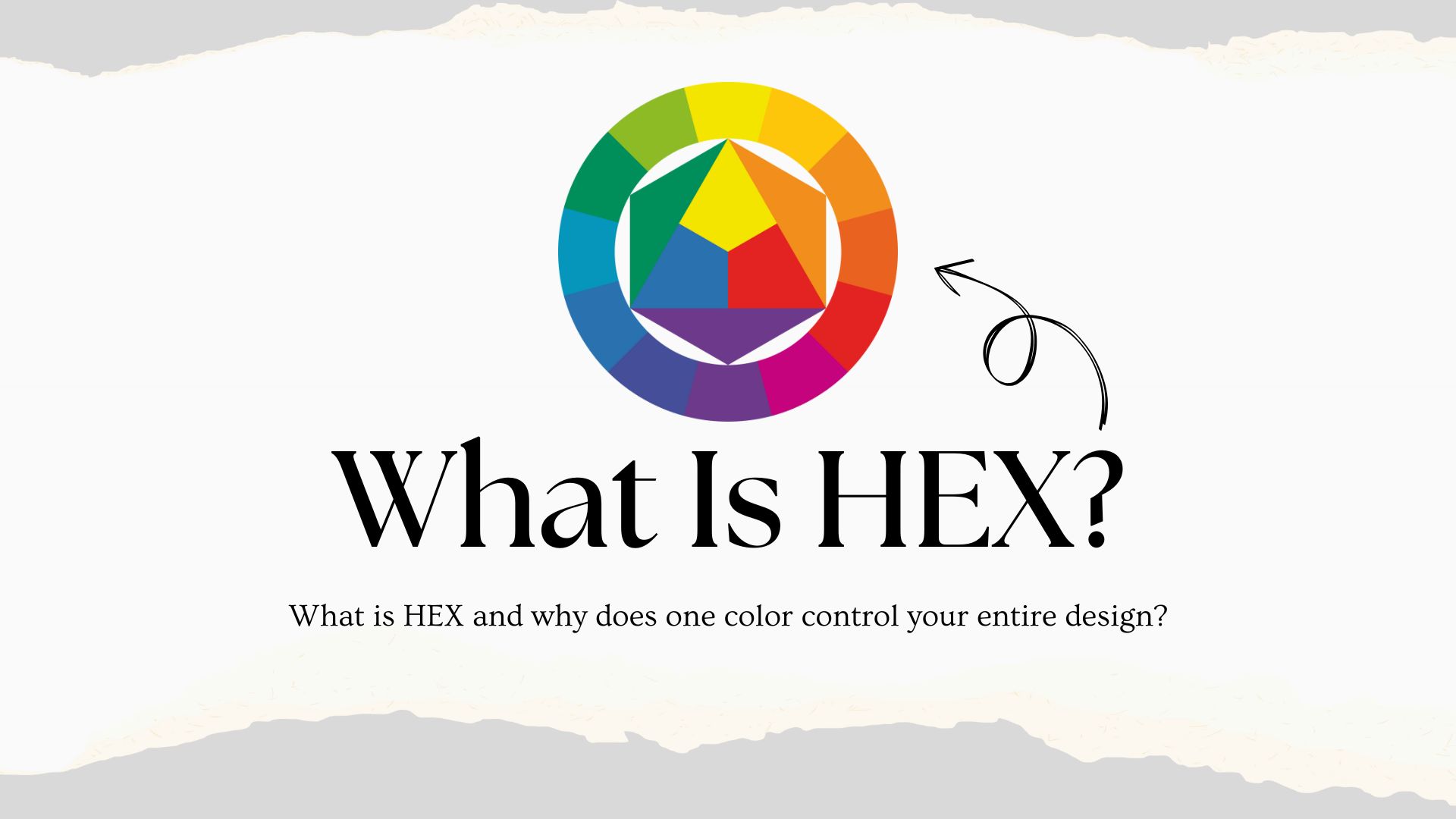
Colors feel emotional, subjective, and almost artistic.
But behind every color you see on a screen, there is math, structure, and precision.
One of the most important systems behind digital color is HEX.
Most people use it every day. Very few actually understand why it matters.
This article breaks it down properly, without buzzwords, without fluff, and without assuming you are a designer or a developer.
What is a HEX color, really?
A HEX color is a way to describe a color using hexadecimal numbers.
It always looks like this:
#RRGGBB
Each pair represents how much Red, Green, and Blue the color contains.
-
RRis red -
GGis green -
BBis blue
Each value goes from 00 to FF.
Why FF?
Because HEX is base 16, not base 10.FF equals 255 in decimal, which is the maximum intensity for a color channel on screens.
So when you see:
#000000
That means no red, no green, no blue. Black.
#FFFFFF
Full red, full green, full blue. White.
Everything in between is a precise mixture.
Why HEX became the standard for the web
HEX did not become popular by accident.
It is:
-
Compact
-
Exact
-
Easy to copy
-
Easy to store
-
Easy for machines to read
-
Easy for humans to recognize
Compared to RGB or HSL, HEX is faster to work with in code and design tools.
It is short, unambiguous, and universal.
That is why browsers, CSS, design systems, brand guidelines, and developers all default to HEX.
If you choose one color format to rule them all, HEX wins.
HEX is not just a format, it is a source
Most people treat HEX as the final result.
In reality, HEX is the starting point.
From a single HEX value, you can generate:
-
RGB values for code
-
HSL values for design logic
-
CMYK values for print
-
Light and dark shades
-
Tints and tones
-
Gradients
-
Contrast ratios
-
Accessible text colors
-
UI states like hover, active, disabled
-
Brand palettes
-
Emotional and psychological associations
All of that comes from one code.
If your HEX is wrong, everything built on top of it is wrong too.
Why small HEX changes cause big design problems
Here is something many teams experience without realizing it.
A button looks fine on one page.
Slightly off on another.
Hover feels weird.
Text contrast is inconsistent.
Dark mode feels uncomfortable.
Very often, the issue is not layout or typography.
It is tiny differences in HEX values.
A color changed from #4F46E5 to #4F47E5.
Almost invisible.
But now contrast shifts. Saturation changes. Accessibility breaks.
Humans feel this inconsistency immediately, even if they cannot explain it.
HEX is precision.
Design breaks when precision is lost.
HEX and accessibility
Accessibility is not optional anymore.
Contrast ratios, readability, and color blindness support all depend on accurate color values.
You cannot calculate accessibility correctly without knowing the exact HEX.
Two colors that look similar can have completely different contrast scores.
HEX allows you to:
-
Measure contrast correctly
-
Ensure readable text
-
Build inclusive interfaces
-
Avoid legal and UX issues
This is not theory. It is practical and measurable.
HEX and branding consistency
Brands live or die by consistency.
If your blue is different on:
-
Your website
-
Your app
-
Your social posts
-
Your landing pages
-
Your product UI
People notice.
HEX acts as a single source of truth.
One color code.
Used everywhere.
No guessing. No eyeballing.
That is how strong brands stay recognizable.
Why most people struggle with HEX in practice
HEX itself is simple.
The problem is everything around it.
People constantly need to:
-
Convert formats
-
Generate shades
-
Check contrast
-
Build palettes
-
Create gradients
-
Test dark mode
-
Export usable values
They jump between tools, tabs, plugins, and websites.
The color is simple.
The workflow is not.
The Chromo idea
This is where Chromo comes in.
At ReadyTools, we noticed something obvious but overlooked.
People already have the HEX.
What they lack is everything that comes from it.
Chromo is built around one idea:
One HEX in. Everything out.
You start with a single HEX code.
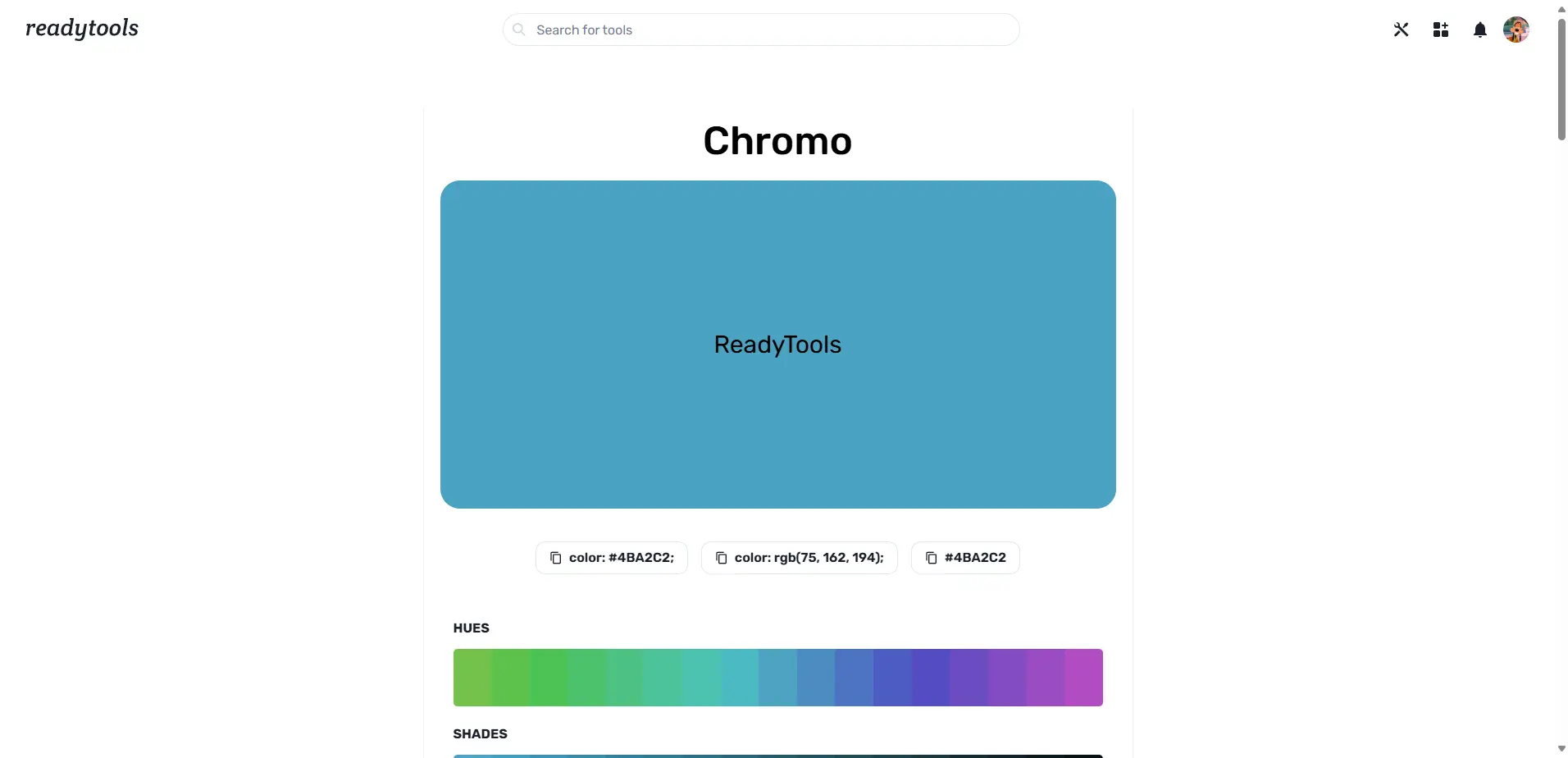
Chromo expands it into:
-
All major color formats
-
Shades, tones, and tints
-
Accessible contrast pairs
-
Gradients
-
Color relationships
-
Psychological context
-
UI ready values
-
Clean, usable output
No accounts required.
No design fluff.
No random inspiration noise.
Just clarity.
Why Chromo is different
Chromo does not try to replace designers.
It does not try to be artistic.
It tries to be correct.
It gives you structure, logic, and confidence in your colors.
Whether you are:
-
Designing a UI
-
Building a product
-
Creating a brand
-
Writing CSS
-
Checking accessibility
-
Teaching color theory
-
Or just curious why a color feels wrong
Chromo starts where everything starts.
With HEX.
Final thought
Colors feel emotional, but they are built on math.
HEX is the bridge between human perception and machine precision.
If you understand HEX, you control your colors.
If you ignore it, you fight them forever.
If you want to see how far a single HEX can actually go, you can explore Chromo here:
https://readytools.co/chromo
One color.
Fully understood.
Cover Image Source: ReadyTools
Enjoyed the article?
Discover the best tools from ReadyTools to streamline your daily work! Social media, SEO, design, and dev – all in one place, under one profile.
Try for freeTable of Contents
Related Posts

Unlocking HTML Secrets: 15 Essential and Lesser-Known HTML Tricks Every Web Developer Should Know in 2026
1/10/2026
Discover 15 essential & hidden HTML tricks for 2026: native accordions, dialogs, responsive images, accessibility hacks & more. Level up your web dev skill
The Best HTML Tricks of 2026 – Features You Should Be Using As Of Right Now
1/10/2026
Discover the best HTML tricks of 2026: native popovers, grouped accordions, container style queries, modern dialogs & more – less JS, better UX!
Chromo: Turning One Color into a Complete System
1/3/2026
Chromo turns a single HEX color into palettes, formats, accessibility checks, psychology, gradients, and code for design and development.