June 3, 2026
Why Compressing Images Still Matters in 2026 (And How I Do It Quickly)
A practical look at a simple, private tool that helps keep images fast and websites performing well.
Read article
Blog article
Stop chasing backlinks and focus on the basics. Many sites fail due to small, hidden SEO issues. Learn how to audit your site and fix them today.
readytools
June 3, 2026
8 min read

Share
When people talk about SEO, the conversation almost always ends up in the same place.
Keywords.
Backlinks.
Domain authority.
Content length.
The problem is that most websites don't fail because of those things.
In fact, some of the worst-performing websites I've looked at already had decent content. They had pages targeting the right keywords. They were publishing regularly. In some cases they had even managed to earn backlinks from reputable websites.
Yet they still struggled to rank.
The reason was usually much less exciting.
A title tag that didn't match search intent. Images that were slowing down the page. Missing metadata. Poor internal linking. Broken social previews. Multiple H1 tags. Content that looked good on the surface but wasn't actually answering the question the searcher had.
None of those issues sound dramatic. Most website owners never notice them. Visitors rarely complain about them. Even developers often overlook them because the website technically works.
But search engines notice.
And over time, those small problems begin stacking on top of one another until a website that should be ranking simply doesn't.
That's why one of the most valuable things you can do for your website isn't publishing another article or chasing another backlink. It's taking a step back and understanding how search engines actually see your pages.
Later in this guide I'll show you a simple way to uncover many of these issues automatically. Before we get there, though, it's important to understand what you're actually looking for and why so many SEO problems remain hidden for months or even years.
One of the strange things about SEO is that many mistakes don't create obvious symptoms.
If your checkout page breaks, you'll know immediately because sales stop.
If your website goes offline, you'll know because visitors start complaining.
SEO doesn't work that way.
A page can be underperforming for six months without giving you any clear warning signs.
Let's say you publish an article targeting a keyword with decent search volume. You wait a few weeks and the rankings never really move. Most people immediately assume they need more backlinks or more content.
Sometimes that's true.
But very often the problem is something much simpler.
Maybe the title isn't compelling enough to earn clicks. Maybe the content doesn't match what searchers actually want. Maybe Google can't easily understand the structure of the page because the headings are inconsistent. Maybe the page loads slowly because of oversized images. Maybe several related articles on your website aren't linking to each other, making it harder for search engines to understand the relationship between them.
The frustrating part is that none of these issues jump out at you while browsing the page normally.
As humans, we experience websites differently than search engines do.
When you open a page, you're focused on the design, the writing, and the overall experience.
Search engines are looking at signals.
They are trying to determine what the page is about, whether it satisfies search intent, how it relates to other pages, whether users engage with it, and whether the technical implementation helps or hurts the experience.
That difference in perspective is where most SEO problems hide.
A website owner sees a page.
Google sees hundreds of signals.
The gap between those two perspectives is often where rankings are won or lost.
Whenever I review a website, I don't start with backlinks.
I don't start with keyword density.
I don't start with advanced technical reports.
I start with the page itself.
The first question is simple:
"If I landed on this page from Google, would I immediately understand why it's the right result?"
That question sounds obvious, but it's surprisingly powerful.
The title should clearly communicate the topic. The heading should reinforce it. The content should immediately begin addressing the problem that brought the visitor there.
A lot of websites fail this basic test.
You click a search result expecting a guide and the first several hundred words are generic introductions. You search for a solution and get a sales pitch. You look for practical advice and find paragraphs stuffed with keywords that were clearly written for algorithms instead of people.
Search engines have become much better at recognizing these patterns.
The pages that consistently perform well are usually the pages that solve the searcher's problem as efficiently as possible.
After that, I look at structure.
Can I skim the page and understand the entire article from the headings alone?
A good article should feel organized. It should guide the reader through a logical sequence of ideas.
When headings are inconsistent or sections feel disconnected, readers become confused. Search engines often do too.
Then I examine the content itself.
Not the word count.
Not the number of keywords.
The usefulness.
Does the page actually answer the question?
Does it provide examples?
Does it explain concepts clearly?
Does it anticipate the reader's next question before they have to ask it?
Those things matter far more than most people realize.
After looking at hundreds of websites, certain patterns appear again and again.
One of the most common issues is weak metadata.
Many pages either have generic titles or titles that try to target too many keywords at once. A title is often the first thing users see in search results. If it fails to communicate value, rankings alone won't save you because nobody will click.
Another recurring issue is internal linking.
Website owners spend enormous amounts of time thinking about backlinks while completely ignoring the links already under their control.
Imagine publishing fifty articles without connecting them together.
To a search engine, that's fifty isolated pages floating around independently.
Now imagine those same articles linked together naturally through related topics, tutorials, and supporting content.
Suddenly the website becomes easier to crawl, easier to understand, and more valuable for visitors.
The difference can be significant.
Images are another surprisingly common problem.
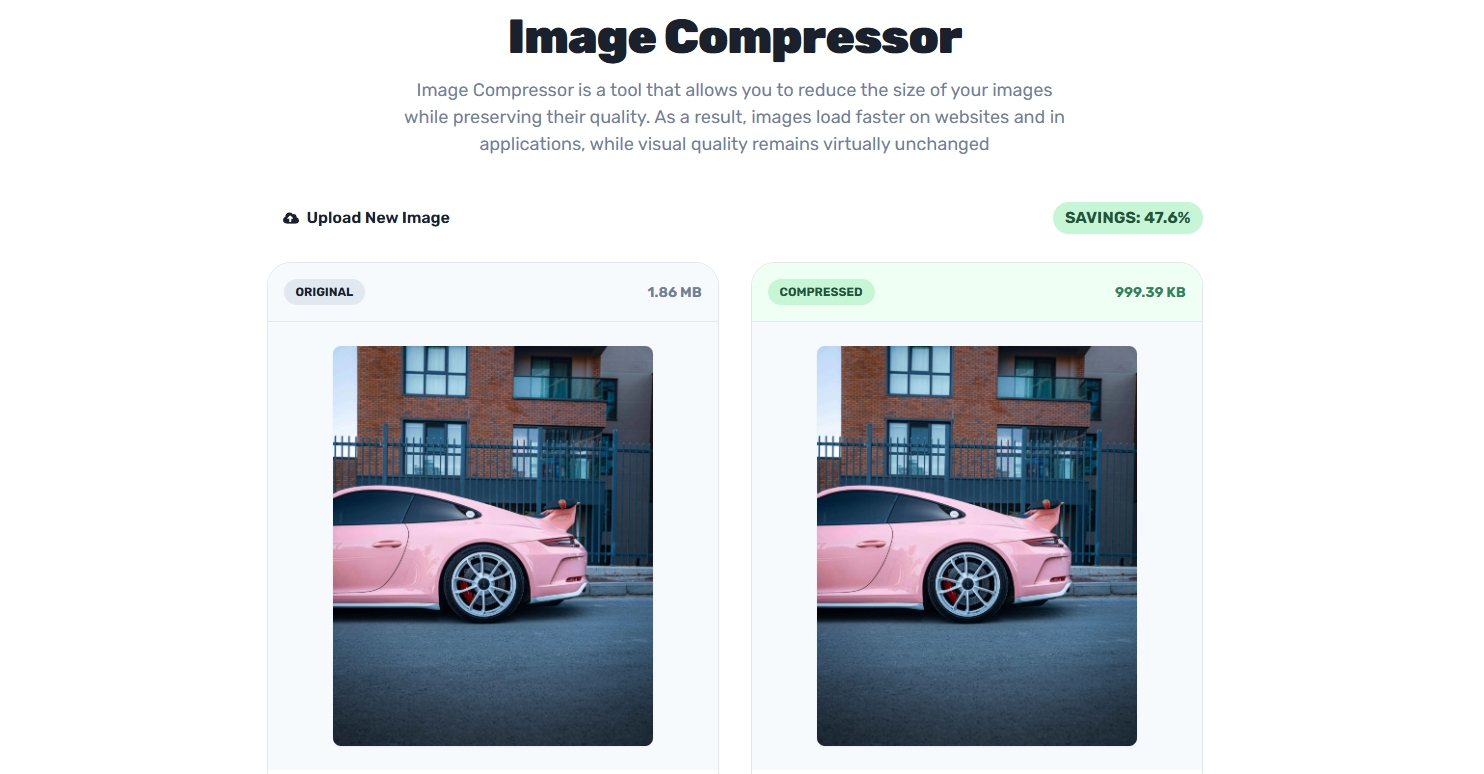
Modern websites are full of beautiful visuals, but many of them are poorly optimized. Large image files quietly slow down loading times. Missing alt text reduces accessibility. Incorrect dimensions create layout shifts that hurt user experience.
Most visitors never consciously identify these problems.
They simply experience a website that feels slightly slower, slightly less polished, and slightly less trustworthy.
Search engines pay attention to those signals.
Then there are social previews.
This is one of those areas people rarely think about until something breaks.
Have you ever shared a page and noticed that the image was missing or the title looked strange?
That's usually the result of missing Open Graph tags or poorly configured metadata.
While social previews aren't direct ranking factors, they influence how often content gets clicked, shared, and distributed.
All of these issues sound small.
That's exactly why they're dangerous.
Nobody wakes up and says, "My website failed because of a missing Open Graph image."
But dozens of small issues working together can absolutely suppress a page's performance.
The challenge with SEO is that every individual problem seems manageable.
Checking a title tag takes seconds.
Reviewing headings takes a minute.
Looking at image alt text isn't difficult.
The problem is scale.
A single page might contain dozens of elements worth reviewing.
A website might contain hundreds.
At that point, manually checking everything becomes unrealistic.
This is where SEO audit tools become useful.
Not because they magically improve rankings.
They don't.
What they do is dramatically reduce the time required to find issues.
Instead of manually inspecting every title, image, heading, link, and technical signal, you can quickly identify areas that deserve attention and focus your effort where it matters most.
The value isn't automation for the sake of automation.
The value is visibility.
You can't fix problems you don't know exist.
If you've been reading this and wondering how many of these issues might exist on your own website, the easiest approach is to run an SEO audit and look at the page the same way a search engine does.
The ReadyTools SEO Analyzer was built specifically for that purpose.
Instead of only looking at one area of SEO, it examines multiple aspects of a page including metadata, heading structure, content signals, image optimization, internal and external links, technical SEO factors, search result previews, and social sharing previews.
Try it here for free.
More importantly, it helps surface problems that are easy to miss during a normal review.
You might discover that a page has duplicate headings. You might find oversized images hurting performance. You might notice metadata issues affecting click-through rates or internal linking opportunities that were overlooked.
None of those discoveries automatically improve rankings.
But they give you something far more useful: a clear starting point.
And that's ultimately what a good SEO audit should provide.
Not a giant report full of meaningless scores.
Not hundreds of recommendations you'll never implement.
Just clarity.
Because once you can see the problems, fixing them becomes much easier.
One of the biggest misconceptions in SEO is that success comes from finding a secret tactic.
In reality, most successful websites aren't doing anything magical.
They're simply better at identifying and fixing problems before those problems accumulate.
They publish useful content.
They maintain clean site structures.
They optimize their pages.
They regularly audit their websites.
And they make it easier for both users and search engines to understand what each page is trying to accomplish.
If your rankings have stalled, don't immediately assume you need more content or more backlinks.
There's a good chance the answer is much closer than that.
Sometimes the thing holding a website back isn't a massive problem.
It's ten small ones that nobody noticed.
Discover ReadyTools: the ultimate productivity suite for creators. Beautiful Linksy pages, smart Lara AI, project management, secure cloud storage, and everything else you need — all together. Start your 7-day free trial today.
Explore ReadyToolsKeep reading
June 3, 2026
A practical look at a simple, private tool that helps keep images fast and websites performing well.
Read article

June 3, 2026
Why human creativity still matters in marketing – and how ReadyTools’ Lara supports the idea generation process.
Read article

June 3, 2026
How we created a beautiful, powerful, and truly customizable link page — and why it’s just the beginning of a much smarter way to work.
Read article